D.C. Christian
Anonymous · Painter · 2026

An anonymous painter working in monumental abstraction Fields
of
Consequence.

Seventy-two by sixty inch canvases built from saturated fields, metallic rupture, connective traces, sparse gestures, and ambiguity. They hold pressure and interruption without resolving themselves into a single meaning.

Catalogue · MMXXVI Scroll Studio · San Francisco
Statement

I make paintings that begin as fields and become records of pressure. I am interested in the point where structure starts to break, where a mark stops behaving like composition and begins to feel like evidence.
Some marks are made by hand. Others are allowed to happen through material behavior: water, gravity, thickness, rotation, surface resistance, and time. I am interested in what appears when control is present but not complete.

Bio

D.C. Christian is the painter name of an anonymous artist working in monumental abstraction. His paintings, known collectively as Fields of Consequence, are 72 × 60 inch canvases built from saturated color, metallic rupture, connective traces, sparse gestures, and physical constraint.

The work sits between structure and instinct, restraint and disruption, concealment and disclosure. It avoids literal narrative, but carries a private tension between memory, pressure, faith, accident, and consequence. Each work includes a recurring signature teardrop.

The surfaces are built through saturation and interruption. A deep ground is established first, not as a backdrop, but as the atmospheric condition of the painting. Metallic passages then enter as raised events, leaving traces shaped by pressure, gravity, water, surface resistance, and time.

On the Name

The name D.C. Christian carries a private connection to inheritance, faith, concealment, and witness. The work is personal, but not biographical. It does not ask to be read as confession.

It asks to be encountered as a field — a charged surface where pressure, rupture, and consequence remain visible without becoming fully explained.

On the Body of Work

The phrase Fields of Consequence refers to paintings that hold the visible residue of pressure, decision, rupture, and relation. They are not diagrams, symbols, or illustrations. They are fields in which marks accumulate, collide, disappear, and reappear. Meaning is not assigned in advance. It is allowed to remain unstable.

Some marks are deliberate. Others are released into gravity. The painting is allowed to keep the evidence of both.

Active Color Chapters

One painting,
one chapter.

Each chapter is a single painting in a saturated shade. The chapter is named when the painting is complete. Only completed chapters are listed publicly.

01 Starwake Celestial blue · Endurance, 2026
02 Emberwake Burnt orange · Rupture, 2026
Private register Names and shades held until completion
Work I · Starwake
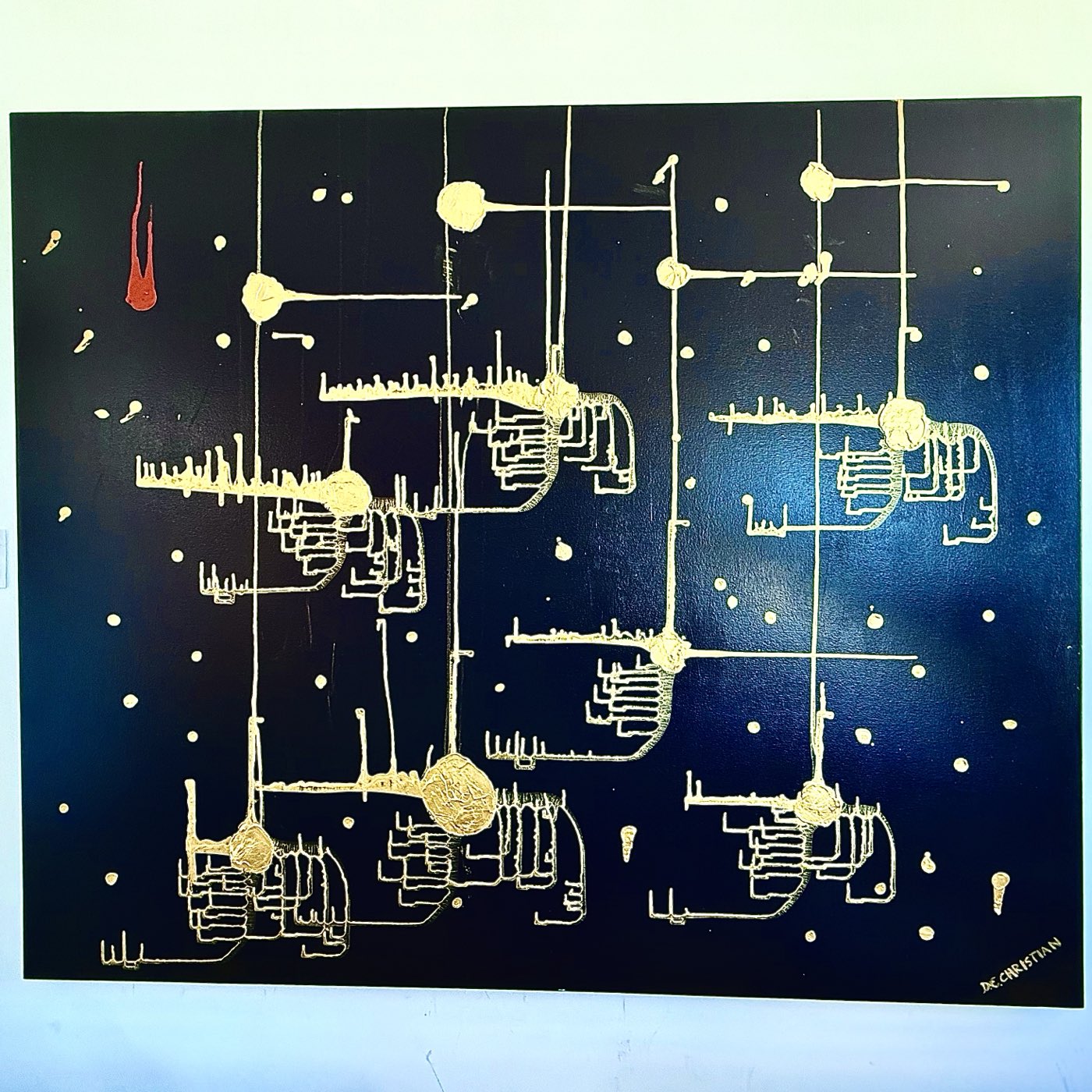
Starwake — celestial blue
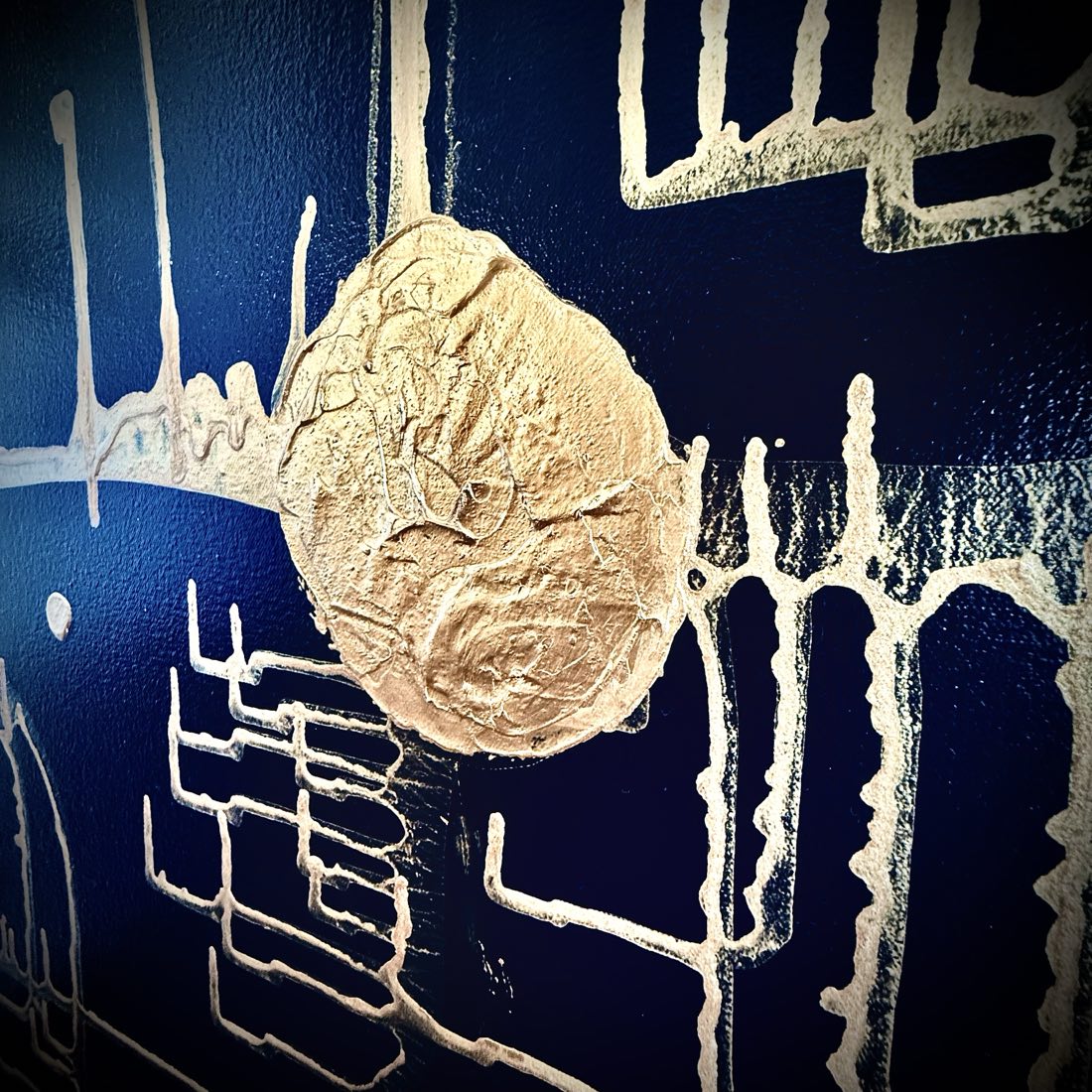
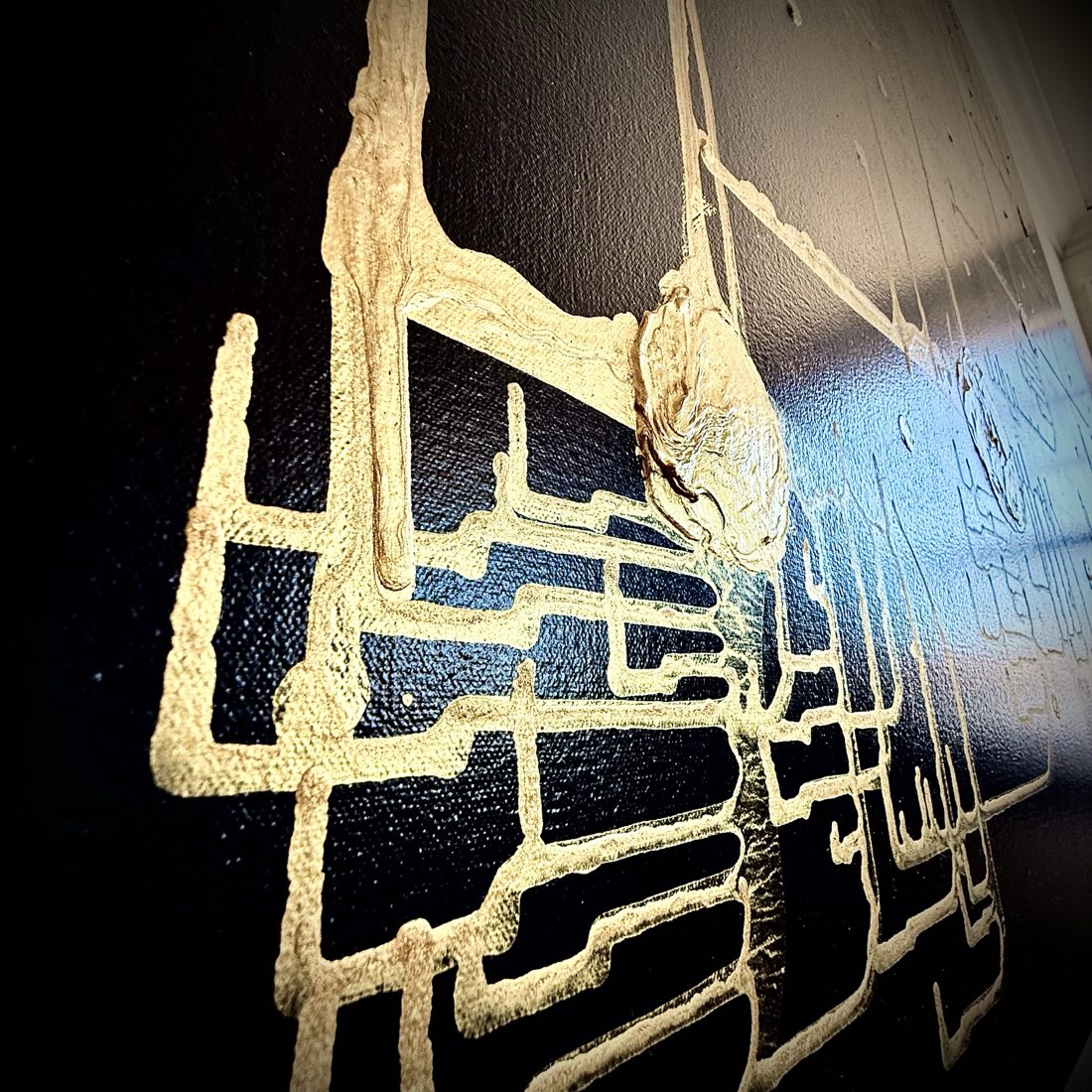
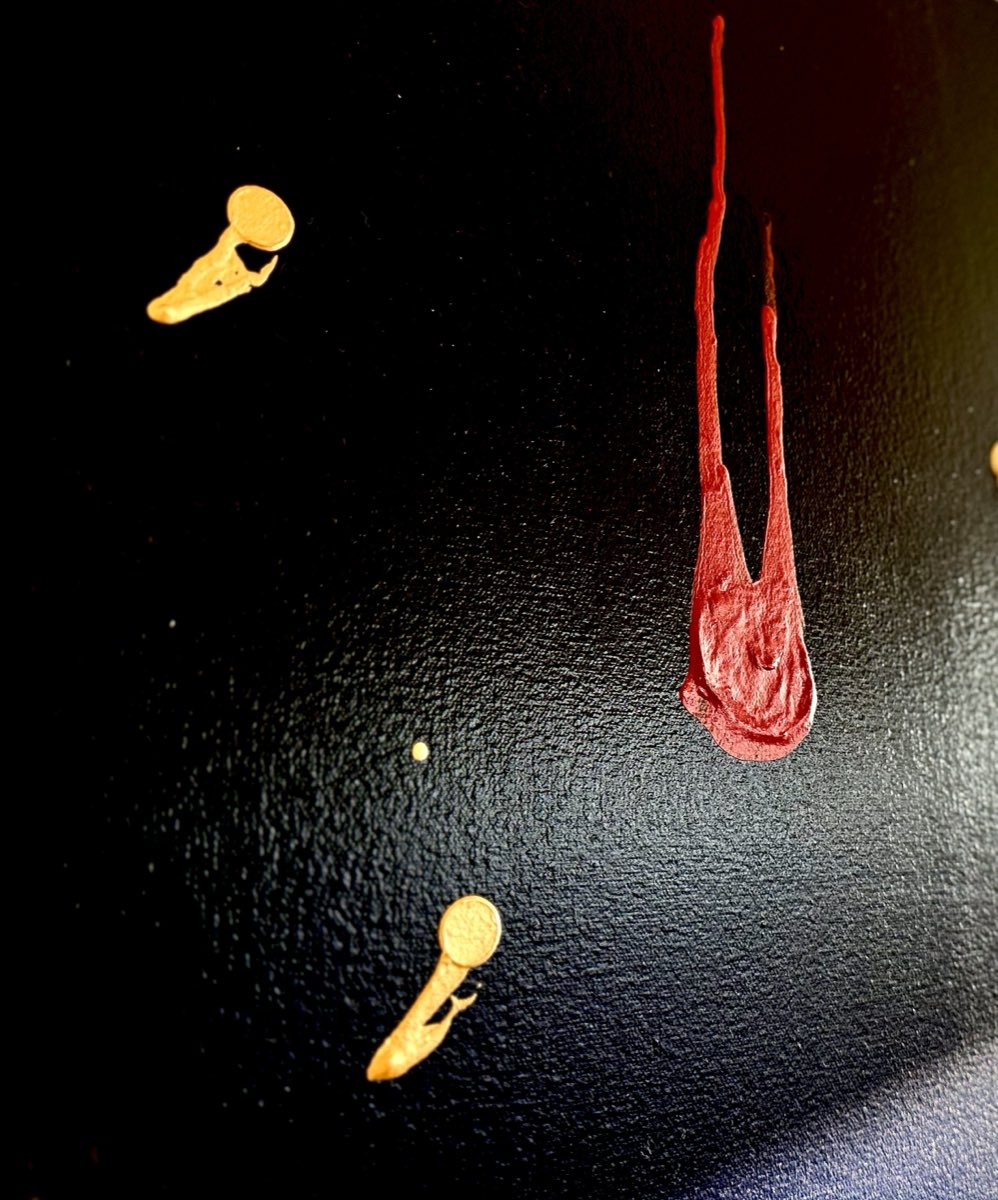
Endurance, 2026, by D.C. Christian. Deep indigo painting, framed in black, with a network of gold structural traces, circular impasto nodes at intersections, scattered gold points, and a red teardrop signature in the upper left.
I · Starwake 72 × 60 in · 2026
In Collection

Endurance, lived with.

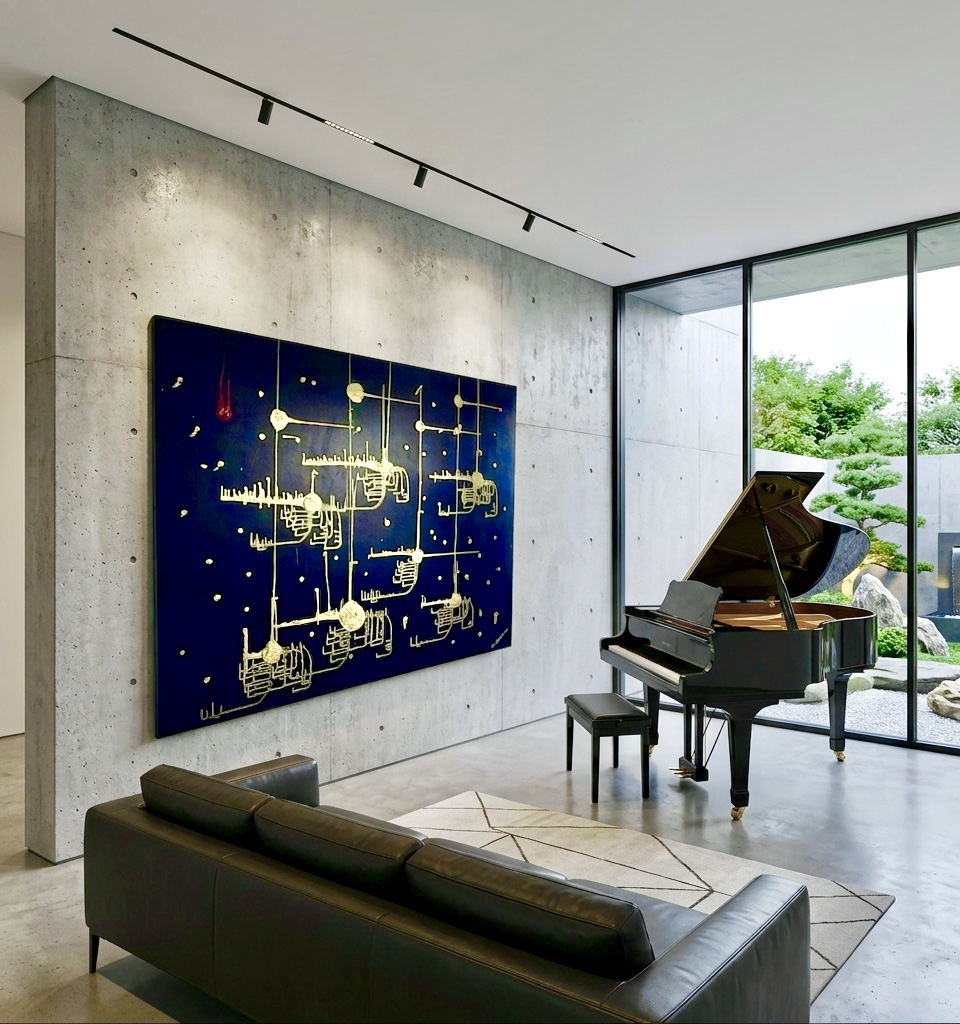
Installed in a private residence. The deep blue field reads against concrete and soft track light; the gold network holds the room.

Endurance, 2026, by D.C. Christian, hung in a private residence — a concrete-walled living room with track lighting, a grand piano, and floor-to-ceiling glass to a Japanese garden.
Endurance · Starwake · 72 × 60 in · private residence · 2026
Work II · Emberwake
Emberwake — burnt orange
II · Emberwake 72 × 60 in · 2026
Critical Readings

A constellation, drawn at the right angle.

Two readings, given separately. The first, from Rafaela Zoletti, an art writer based in New York, concerns the network and the question of serendipity. The second, from Joseph Abelman, an art writer based in Los Angeles, concerns the hand, and what is concealed in the act of showing.

What strikes you, after time spent with Endurance, is the network. The gold does not pool or scatter; it draws. Lines run vertically and horizontally across the indigo, meeting at sculptural nodes that sit on the surface like beads of evidence. Between them, smaller points are scattered through the field, untethered, like stars in the spaces a constellation does not connect.

The lines read as syntax. Each node is a moment that happened on the canvas. The line from one node to the next is how those moments converse. Some pairs are linked by short, direct strokes. Others travel a long distance to find each other. To follow the network is to read a sentence about two moments — and then a paragraph about four, and then a chapter about ten.

The technique invites accident. The misted traces and the smaller scattered points are not directed; where they land is gravity's decision, and the binder's decision, and the canvas's decision. That so many of those decisions appear, in retrospect, to have fallen exactly where the composition needed them is what the work calls serendipity. Not coincidence pretending to be design. The painter sets up the conditions for accident, draws the structure that can hold it, and trusts the field to absorb whatever the conditions produce.

The red mark in the upper-left, when you finally find it, is not a punctuation mark on the work. It is the witness of it. It falls through the constellation rather than sitting beside it.

Rafaela Zoletti · New York · 2026

What the second hand knows.

The first reading takes the network as the subject. I want to take the hand. Christian's method splits each painting between two hands — the dominant one, which builds the ground; the non-dominant one, which interrupts it. What appears on the canvas is the argument between them. The painter is in the work twice, and the two voices do not fully agree.

This is unusual. Most painters whose work I know are interested in fluency — the long developed signature of a single hand, refined across decades. Christian is interested in something else: in keeping resistance visible. The non-dominant hand cannot disguise its hesitation. It leaves marks that the trained hand would have corrected. Those marks are not flaws. They are the part of the painting that knows it is being made.

The studio's own language is careful here. It speaks of concealment and disclosure, two motions held together. A painting that conceals nothing is a diagram. A painting that discloses nothing is decoration. Endurance works because it does both at once. The deep field conceals; the gold network discloses. The red teardrop, which most viewers find last, is the smallest unit of disclosure — small enough to be missed, definite enough that once seen it cannot be unseen.

The painter has said the work is personal but not biographical. I take this seriously. The paintings are not encrypted autobiography. They are the residue of how a particular person works through a particular set of constraints. That residue is more interesting, in the end, than the biography would be.

Joseph Abelman · Los Angeles · 2026

Studio Method

Control is present,
but never complete.

i. Saturated ground

Dominant hand

Each painting begins with a saturated field laid by the dominant hand. The initial ground establishes control, fluency, and order. It is not a backdrop. It is the painting's atmospheric condition.

ii. Resistance

Non-dominant hand

Later interventions are made with the non-dominant hand. Resistance and instability enter the surface. The hand that hesitates leaves a different mark than the hand that knows.

iii. Time constraint

A window of 333 minutes

Each painting is made in exactly 333 minutes — a window set before the first mark and held to the second. The limit prevents the work from becoming overcorrected or overly fluent. The clock is part of the field.

iv. Irreversible actions

Marks that stay

Each work contains irreversible actions that cannot be repaired or overpainted into submission — misting events, dropped paint, ruptures, drags, blooms, and other material events. The painting must absorb them and continue from there.

Technique · Rotational Water-Induced Traces

Gravity, rotated. Then rotated again.

After the deep ground has cured and the heavy metallic impasto passages are applied, the canvas is set vertically or on a slight incline. While the metallic paint is still wet and heavily loaded, a fine targeted mist of water is sprayed onto selected gold passages.

The water breaks the surface tension. It pools at the lower edge of the palette-knife marks and slowly loosens the binder until small beads of diluted metallic pigment begin to breach the mass. Rather than brushing or directing the lines, gravity and fluid dynamics determine their movement.

The canvas is then rotated clockwise between selected activations. Each new misting acts from a different orientation. The finished surface may carry multiple gravity signatures: traces that descend, drift, angle, contradict. Some lines fall straight. Others move diagonally. Some merge, pool, fade, or stop abruptly as the water evaporates into the surface.

The procedure carries built-in variables. The amount of water misted onto each metallic mass varies. The force applied during each rotation varies. The angle of rotation is not fixed and may change between events. The canvas may be rotated additional times in unspecified directions. These variables are the reason the same procedure produces a different painting every time it is run.

Painting is also made by direct gravitational deposit. Drops of paint are released onto the surface from approximately three feet above the canvas. Velocity, air resistance, and impact determine the resulting mark; the artist determines only the point of release.

At this scale, rotating an active canvas requires force and timing; the labor leaves its own pressure on the work.

Display

Made under gravity, hung against it.

Each painting is shown hung in the orientation opposite to the one in which it was made. The procedure builds the canvas with gravity descending toward what becomes the top of the displayed work; the viewer encounters the surface inverted from its making. The marks read as ascending rather than descending. The wall denies the gravity that authored the surface.

Inquiry

Speak to the studio.

Acquisitions, curatorial requests, and press communication are handled directly through the studio. Replies are unhurried.

A · Private Inquiry

For collectors and individuals interested in the work. Sending this form delivers your message to the studio.

B · Curatorial & Press

Studio correspondence

For exhibitions, institutional acquisitions, catalogue contributions, and editorial requests. Anonymity is part of the work; coverage that respects it is welcomed.

LocationSan Francisco, California